What Waterfront Owners Actually Own in Michigan
Why Great Lakes shoreline rights, inland lake rights, public access, and private ownership are not the same thing.

A person walking the beach.
A waterfront owner defending privacy.
A shoreline the public believes it can use.
That is usually where waterfront disputes begin.
Most people assume waterfront ownership is simple.
You buy the shoreline.
You control the shoreline.
Everyone else stays off it.
In Michigan, it is often more complicated than that.
This matters when buyers compare properties.
Two waterfront homes may look similar online.
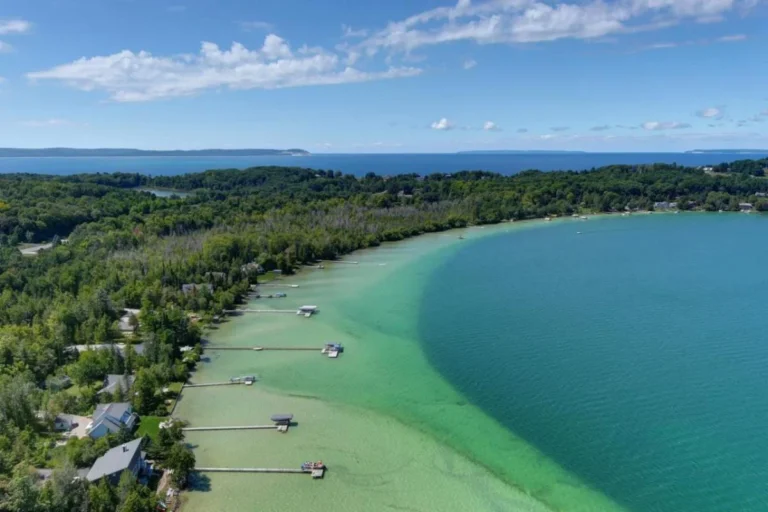
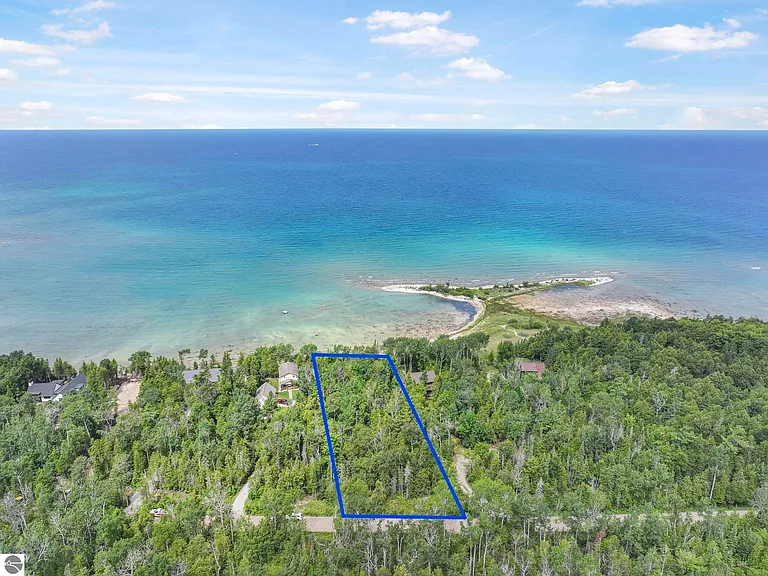
One may sit on Lake Michigan.
The other may sit on an inland lake.
A third may sit near a public road end, shared access point, trail system, or public beach.
Those properties may all be “near the water,” but they may offer very different ownership experiences.
That is because waterfront ownership is not a single right.
It is a bundle of rights.
And the contents of that bundle can change depending on the water body, public access patterns, shoreline history, public trust rights, deed language, plats, easements, road ends, permitting rules, and practical privacy.
This article is not about taking sides in shoreline disputes.
It is about helping buyers understand why waterfront ownership can feel very different from one property to the next.
The core issue is not usually who is right or wrong in a shoreline argument.
The core issue is that people often confuse four separate categories:
- ownership rights
- access rights
- public trust rights
- shoreline use rights
When those categories get blurred, expectations get distorted.
And distorted expectations are where many waterfront disputes begin.
Why Waterfront Ownership Is More Complicated Than Most Buyers Think
When a buyer says, “I want waterfront,” what they usually mean is a combination of:
- views
- access
- privacy
- shoreline use
- control
- dockage
- swimming
- boating
- long-term enjoyment
The problem is that those are not all the same right.
A property may have a beautiful view but no direct waterfront ownership.
A property may have shared water access but no private frontage.
A property may have direct Great Lakes frontage but still be subject to public walking rights below the Ordinary High Water Mark.
A property may have inland lake frontage with Riparian Rights and stronger bottomland expectations than a Great Lakes property.
A property may sit near a Public Road End that changes traffic, parking, and privacy patterns.
That is why waterfront ownership should be evaluated as a bundle of rights, not just a number of frontage feet.
Michigan law draws important distinctions between Great Lakes Waterfront and Inland Lake Waterfront.
It also distinguishes between a property that directly touches the water and a property separated from the water by a public road, platted walk, boulevard, parkland, association strip, or other public or shared access area.
Even when a property owner holds Littoral Rights or riparian rights, those rights may coexist with public trust rights, public navigation rights, public road-end rights, or dedication language that allows public access to the water.
That is why so many waterfront disputes are really expectation disputes.
The parties may be arguing from different assumptions about what the owner actually owns and what the public is actually allowed to do.
For buyers, this is not academic.
If you think you are buying exclusive shoreline control and later learn that the public may lawfully walk below the Ordinary High Water Mark, your ownership experience changes.
If you assume inland lake frontage works like Great Lakes beachfront, that can be wrong in the other direction.
If you assume a small public access next door is “just a path,” but it operates as a real water access point in summer, that can affect noise, parking, and Practical Privacy in ways the listing sheet may never explain.
That is why the most important waterfront question is not simply:
“How many feet of frontage does this property have?”
The better question is:
“What rights come with that shoreline, and what rights remain with the public, neighbors, or other access users?”
That is the foundation of Waterfront Ownership.
Why Great Lakes Waterfront Is Different
Michigan treats the Great Lakes differently from inland lakes.
That distinction is one of the first things waterfront buyers need to understand.
On Michigan’s Great Lakes, private ownership, public trust rights, state regulation, the Ordinary High Water Mark, water-level movement, erosion, accretion, and shoreline permitting can all shape the ownership experience.
The Public Trust Doctrine is central to this issue.
In broad terms, the public trust doctrine recognizes that certain natural resources are preserved for public use and cannot be completely controlled by private ownership.
On Michigan’s Great Lakes, that doctrine helps explain why public rights may exist even where the adjacent upland is privately owned.
That combination can feel counterintuitive to buyers.
A private owner may hold title to a Great Lakes shoreline parcel and still not have the kind of exclusive beach control that some buyers expect.
Below the Ordinary High Water Mark, Great Lakes shoreline ownership and public trust rights can overlap.
This does not mean the public can treat all private shoreline as a public park.
It does not mean the public can cross private upland property, use private decks, use private stairs, occupy private yards, or ignore local rules.
But it does mean Great Lakes waterfront buyers should understand that the ownership experience may include public shoreline walking below the OHWM.
That is different from many inland lake ownership expectations.
Great Lakes waterfront is also physically dynamic.
Shorelines move.
Water levels change.
Beaches widen and narrow.
Bluffs erode.
Sand accumulates.
Storms reshape the shoreline.
A buyer is not simply buying a static line on a plat map.
The buyer is buying into a changing shoreline environment subject to public trust doctrine, shoreline regulation, and practical access patterns.
That can affect:
- privacy expectations
- shoreline improvements
- seawalls
- docks
- stairs
- erosion control
- bluff management
- beach use
- resale expectations
- long-term value
This is why Waterfront Usability matters as much as frontage length.
The Beach Walker Case and the Ordinary High Water Mark
Michigan’s landmark Great Lakes beach-walking case is commonly known as the Beach Walker Case.
The formal case name is Glass v. Goeckel.
In that case, the Michigan Supreme Court considered whether a member of the public could walk along the Great Lakes shoreline where a private owner claimed title to the water’s edge.
The Court held that Michigan’s public trust doctrine protects public walking along the Great Lakes shoreline below the Ordinary High Water Mark.
That decision is one reason the Ordinary High Water Mark is so important for Great Lakes buyers.
The OHWM is not just a technical shoreline phrase.
It affects how buyers understand the boundary between private ownership expectations and certain public shoreline rights.
The Court described the Ordinary High Water Mark as the point where the presence and action of water are so continuous that they leave a distinct mark through erosion, vegetation change, or another recognizable physical characteristic.
For buyers, the practical takeaway is this:
On Michigan’s Great Lakes, private ownership and public shoreline walking rights can coexist.
That is a difficult idea for many buyers because they often think of ownership and public use as mutually exclusive.
They are not always mutually exclusive.
But buyers should also avoid overreading the Beach Walker Case.
The case supports walking below the OHWM on the Great Lakes.
It does not mean every activity on the beach is automatically allowed.
It does not turn private frontage into an unrestricted public beach.
It does not answer every question about sitting, picnicking, fires, dogs, vehicles, permanent occupation, private improvements, or public access routes.
Beach walking, public ingress and egress, and day-long occupation of shoreline are not automatically the same thing.
When buyers fail to separate those ideas, they often misjudge the privacy and use profile of a Great Lakes parcel.
That misjudgment can create Buyer Friction Signal and Interpretation Gap Risk during a transaction.
Why Inland Lakes Are Different
This is where many waterfront buyers make the biggest conceptual mistake.
They take a Great Lakes rule and assume it applies to inland lakes.
Or they buy an inland lake parcel assuming it carries a Great Lakes-style public shoreline corridor.
That can be wrong.
Michigan generally does not treat inland lake frontage the same way it treats Great Lakes shoreline.
On many natural inland lakes, riparian owners may have ownership interests in adjacent Bottomlands, subject to public rights, environmental regulation, neighboring riparian rights, and other limitations.
Those riparian rights can include access to the water, reasonable water use, dockage, boating access, and other rights tied to shoreline ownership.
That is a very different ownership pattern from Great Lakes shoreline.
The takeaway is not that inland lakes are always completely private.
They are not.
The public may still have rights in navigable waters.
Public access sites may exist.
Boating, fishing, and navigation may be lawful depending on access and water-body status.
But buyers should not assume a Great Lakes-style right to walk across privately owned inland lake shoreline or bottomlands.
Inland lake waterfront and Great Lakes waterfront should be evaluated differently.
That difference can materially affect:
- beach privacy
- dock rights
- bottomland expectations
- public use
- shared access disputes
- STR guest use
- resale confidence
- long-term ownership satisfaction
A buyer who wants stronger control over the immediate shoreline experience may prefer one type of water body.
A buyer who values long beach walks and Great Lakes scale may prefer another.
Neither preference is wrong.
The mistake is assuming all “waterfront” behaves alike.
Public Access Versus Shoreline Access
A second major source of confusion is the difference between public access and public shoreline use.
Those are not the same thing.
A public access point may allow people to reach the water.
That does not automatically mean the public can use the area as an unrestricted beach.
A Public Road End may allow ingress and egress to the water.
That does not automatically mean private docks, boat hoists, overnight mooring, storage, picnicking, beach occupation, or parking are allowed.
Michigan road-end law and related cases distinguish between access to the water and broader use of the shoreline.
That distinction matters because buyers often ask the wrong question.
They ask:
“Is there public access nearby?”
That is a start.
But the better questions are:
- What kind of access is it?
- Is it a public road end?
- Is it a public park?
- Is it a public launch?
- Is it an association beach?
- Is it a platted walk?
- Is it a private easement?
- Is it a Great Lakes shoreline access point?
- What activities are allowed there?
- How is it actually used in summer?
A state park beach is different from a public road end.
A road running parallel to the water is different from a street ending perpendicular at the water.
A shared association path is different from a public access site.
A Great Lakes shoreline corridor below the Ordinary High Water Mark is different from a dedicated strip allowing ingress and egress.
Those differences are not cosmetic.
They define how the shoreline actually functions.
This is where Public Access, Access Friction, and Practical Privacy become especially important.
Local Lessons from Empire, Northport, and Cathead Bay
Leelanau County is a good place to learn these distinctions because it compresses many shoreline types into a small geography.
Within a short drive, a buyer can encounter:
- classic Lake Michigan frontage
- Grand Traverse Bay frontage
- inland lake frontage
- public road-end access
- state park shoreline
- village beach access
- trail-based shoreline access
- sensitive dune and habitat areas
- private association access
- shared waterfront communities
That is why local context matters.
The law matters.
But so do topography, parking, trail access, public land ownership, signage, vegetation, seasonal use, and how people actually reach the water.
South Bar Lake in Empire
South Bar Lake is a good reminder that water-body labels can oversimplify.
South Bar Lake sits just north of Empire, near Lake Michigan and Sleeping Bear Dunes National Lakeshore.
It can feel inland in one sense and Great Lakes-adjacent in another.
That matters because buyers often want a simple label.
They want to know:
“Is this Great Lakes waterfront or inland lake waterfront?”
Sometimes the answer may be more nuanced.
A place like South Bar Lake may involve its own water-body characteristics, public access patterns, recreational use, nearby parkland, and Lake Michigan-adjacent geography.
The buyer’s due diligence question should be:
“What exactly is the ownership and access framework here, and how does the surrounding public shoreline system affect actual use?”
That is different from simply asking whether a property is “on the water.”
The water-body context matters.
The public-use context matters.
The ownership documents matter.
The actual access pattern matters.
Northport’s 7th Street Access
Northport’s 7th Street access controversy teaches a different lesson.
The issue is not only whether public access exists.
The issue is how public access is understood, signed, used, enforced, and experienced by nearby owners and users.
A public road end or public access point can be legally real, socially contested, and operationally significant all at the same time.
That can affect:
- traffic
- parking
- swimming
- public expectations
- neighbor relations
- signage disputes
- privacy
- buyer confidence
- resale interpretation
The lesson for buyers is not to take sides.
The lesson is to understand that nearby access points can materially change the ownership experience.
This is why a property near a public access point should be evaluated differently from a visually similar property without nearby access pressure.
For a deeper local example, see Northport 7th Street Access.
Why Cathead Bay Feels Different
Cathead Bay shows the opposite dynamic.
Legally, it is still Great Lakes shoreline.
But experientially, it can feel very different from a village road-end beach or developed shoreline neighborhood.
Cathead Bay is shaped by:
- natural shoreline
- trail-based access
- surrounding public land
- dune systems
- wetlands
- habitat sensitivity
- longer approach routes
- seasonal use patterns
- ecological constraints
This is exactly why two Great Lakes properties operating under the same broad public trust framework may still feel completely different.
One shoreline can function like a lightly used natural coast.
Another can function like a village-adjacent swim access.
The law matters.
But so do access routes, topography, habitat protections, trail design, public land ownership, and how people actually reach the water.
Legally, Cathead Bay still operates within the broad Great Lakes framework.
But ownership experience is not determined by legal rights alone.
Practical access matters.
A shoreline that requires trails, park access, habitat awareness, and a longer walk may feel far more private than a shoreline with convenient road-end access and regular public use.
That is the difference between legal rights and Practical Privacy.
What Waterfront Owners Actually Own
So what does a waterfront owner actually own in Michigan?
The answer depends on the property.
Usually, the owner owns the upland parcel and whatever riparian or littoral rights attach to it.
On the Great Lakes, that ownership is shaped by a dynamic shoreline boundary and public trust rights below the Ordinary High Water Mark.
On natural inland lakes, the owner may have stronger bottomland rights adjacent to the parcel, but those rights still coexist with public interests in navigation, fishing, environmental regulation, and the rights of other riparian owners.
Near public road ends, platted walks, parks, or shoreline access points, the ownership experience can be further shaped by dedication language, public access rules, parking patterns, and practical use.
That is why my due-diligence questions for waterfront buyers are usually more important than the marketing description.
Before assigning value to shoreline frontage, buyers should ask:
- What kind of water body is this: Great Lakes, bay, inland lake, stream, or a connected water body with hybrid practical issues?
- Does the parcel directly touch the water, or is it separated by a road, walkway, parkland, or dedicated access strip?
- If this is Great Lakes frontage, where does the Ordinary High Water Mark matter for use, walking rights, and permitting?
- If this is inland frontage, what riparian rights, bottomland rights, and dockage rights are attached to the parcel?
- Are there easements, association rights, or shared waterfront rights benefiting others?
- Is there a public road end, beach park, trail access, or shoreline corridor nearby?
- Are there EGLE or local permitting constraints for seawalls, stairs, dunes, docks, dredging, fill, or shoreline protection?
- Are there habitat, erosion, bluff, or other physical conditions that change how the shoreline can actually be used?
- Does the property’s practical privacy match the buyer’s expectations?
- Would a future buyer understand the same rights clearly?
These questions are not meant to discourage waterfront buyers.
They are meant to protect them.
The strongest waterfront buyers do not simply ask how much shoreline a property has.
They ask what rights come with that shoreline.
Why This Matters to Value
Waterfront value is not based only on frontage.
It is also based on the usability, privacy, access, rights, and confidence attached to that frontage.
Two waterfront properties may have similar views, similar frontage, and similar prices but offer very different ownership experiences.
One may offer strong direct waterfront use.
Another may offer access but limited control.
One may feel private in practice.
Another may be legally private but heavily affected by public access patterns.
One may support dockage.
Another may have uncertain permitting or physical limitations.
One may be easy for future buyers to understand.
Another may create confusion every time it is sold.
This is why Waterfront Supply Constraints are only part of the valuation story.
Scarcity matters.
But usability matters too.
Ownership clarity matters too.
Practical privacy matters too.
A waterfront property is strongest when the rights, use, and buyer expectations line up.
Practical Verification Note
This article is an educational overview, not legal advice.
Michigan waterfront law is highly fact-specific.
The answer can turn on:
- deeds
- surveys
- plats
- easements
- dedication language
- court history
- permit status
- water-body classification
- public access location
- local ordinances
- title exceptions
- association documents
- shoreline conditions
Buyers should consult qualified legal counsel, title professionals, surveyors, EGLE, and the appropriate township, village, county, or state agencies before relying on assumptions about shoreline rights.
The goal is not to memorize waterfront law.
The goal is to understand how shoreline rights translate into real-world ownership experience.
Because in Michigan, the most important waterfront question is rarely:
“How much shoreline does this property have?”
The more important question is:
“What comes with it?”
Related Concepts
- Waterfront Ownership
- Great Lakes Waterfront
- Inland Lake Waterfront
- Ordinary High Water Mark
- Public Trust Doctrine
- Beach Walker Case
- Littoral Rights
- Riparian Rights
- Bottomlands
- Public Road End
- Public Access
- Shared Waterfront Access
- Practical Privacy
- Access Friction
- Waterfront Usability
- Dockable Shoreline
- Protected Water
- Seasonal Honesty
- Shoreline Setbacks
- Regulatory Friction
- Buyer Friction Signal
- Interpretation Gap Risk
Related Guide
For a broader framework on evaluating waterfront property before buying or selling, see the Northern Michigan Waterfront Property Guide.
Sources Consulted
Michigan EGLE, Great Lakes public trust and submerged lands guidance
Michigan EGLE, Ordinary High Water Mark guidance
MCL 324.32502
Glass v. Goeckel, Michigan Supreme Court, 2005
Michigan EGLE, Inland Lakes and Streams guidance
Michigan State University Extension, public road ends and riparian rights materials
MCL 324.30111b
McCardel v. Smolen
Thies v. Howland
National Park Service materials related to Empire and South Bar Lake
South Bar Lake water-quality materials
Interlochen Public Radio reporting on Northport 7th Street access
Village of Northport public meeting materials
Michigan DNR materials on Cathead Bay Natural Area
Working With Sander Scott
Sander Scott is a Northern Michigan real estate broker based in Northport, Michigan.
Through Net Real Estate, he helps buyers, sellers, and landowners evaluate waterfront property, Great Lakes frontage, inland lake property, shared waterfront access, public access issues, short-term rental potential, property usability, ownership patterns, and transaction risk across Northport, Leelanau County, Grand Traverse County, Benzie County, Antrim County, Kalkaska County, and surrounding Northern Michigan markets.
His waterfront evaluation process focuses on what the property is, what the documents say, what the rules allow, and how the property actually lives.
If you are buying or selling waterfront property in Northern Michigan, understanding what waterfront owners actually own is one of the most important steps before assigning value.
Sander Scott
Northern Michigan real estate broker and owner of Net Real Estate.
Built around property usability, local knowledge, and better real estate decisions.