Most waterfront buyers start with the same things.
The view.
The beach.
The sunset.
The frontage.
Those things matter.
But after years of selling waterfront property in Northern Michigan, I have noticed that the long-term ownership experience is often shaped by something else entirely:
How much of the property you can actually use.
That is where shoreline regulation, setbacks, bluff conditions, environmental restrictions, and access issues start to matter.
Two waterfront properties can have the same amount of frontage and sit on the same body of water.
Yet one can be dramatically more useful than the other.
This article is part of Sander Scott’s broader Northern Michigan Waterfront Property Guide, which explains how waterfront usability, shoreline function, protected water, dockability, shared waterfront access, and long-term ownership fit affect waterfront value.
The Mistake Many Buyers Make
A lot of buyers assume that owning waterfront means they can use the property however they want.
That is not always how waterfront ownership works.
A property may have:
- beautiful frontage
- incredible views
- direct access to the water
and still face limitations on:
- additions
- new construction
- septic placement
- shoreline improvements
- stair systems
- bluff access
- future redevelopment
The water may be the same.
The ownership experience may not be.
One of the most expensive mistakes waterfront buyers make is what I call the Frontage Trap.
The Frontage Trap occurs when buyers assume waterfront frontage and Waterfront Usability are the same thing.
They are not.
Two properties can have identical frontage and produce completely different ownership experiences.
Why Setbacks Matter
What makes waterfront complicated is rarely a single restriction.
More often, multiple limitations begin stacking together.
Setbacks.
Bluff conditions.
Septic limitations.
Access realities.
Environmental review.
Each may be manageable individually.
Together they compress waterfront usability.
Many buyers think of setbacks as a technical issue.
In reality, Shoreline Setbacks often determine how flexible a property will be over time.
They influence:
- where a home can sit
- whether an addition is possible
- where a septic system can go
- whether accessory structures can be added
- what future redevelopment may look like
Two lots can have identical frontage and completely different building potential because of how setbacks interact with wetlands, topography, bluffs, and existing structures.
The frontage might be identical.
The usable area might not be.
The Cathead Bay Example
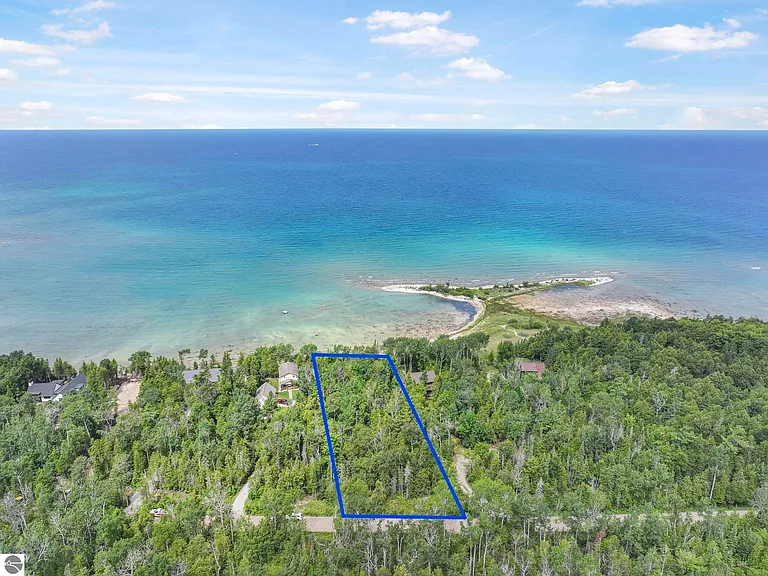
I have seen this firsthand on properties in Cathead Bay.
From the road, a parcel may appear large and straightforward.
From the shoreline, it may look even better.
But once bluff setbacks, wetlands, and other restrictions are applied, the actual area available for construction can be much smaller than buyers expect.
Nothing about the lot changed.
The understanding of the lot changed.
That difference affects value.
Because buyers ultimately pay for what they can realistically use, not what appears to exist on paper.
That is closely related to the Buildability Gap. A waterfront lot may appear to offer one thing at first glance, but zoning, setbacks, septic, access, wetlands, and environmental review can reveal a very different practical outcome.
Related reading:
The First Seller Sold Uncertainty. The Next Seller Sold Answers.
Why Older Waterfront Homes Sometimes Have Hidden Value
One of the biggest misconceptions I hear is:
“If I don’t like the house, I’ll just tear it down and build a new one.”
Sometimes that is possible.
Sometimes it is not.
Many older waterfront homes were built under a different regulatory environment than exists today.
In some cases, the existing structure occupies a location that would be difficult or impossible to recreate under current rules.
That can make the existing house more valuable than buyers initially realize.
The value is not always in the structure itself.
Sometimes it is in the location the structure already occupies.
That is why older waterfront homes, grandfathered structures, established septic locations, and existing access solutions should be evaluated carefully before assuming redevelopment is simple.
Bluff Access Is Often More Complicated Than It Looks
Bluff access creates some of the biggest surprises in waterfront transactions.
Many buyers see a bluff and assume stairs can always be added later.
That is not necessarily true.
Depending on the location, the rules surrounding new stairs, replacement stairs, repairs, boardwalks, or other access improvements can be very different.
In some situations, existing access has tremendous value because recreating it later may be difficult.
The question is not simply:
Can I get to the beach today?
The better question is:
Will I still be able to get to the beach ten years from now?
That is where Access Friction becomes important. A property may appear to have waterfront access, but the actual experience of reaching, maintaining, and using that access may be more complicated than buyers expect.
A Good Harbor Bay Example
I represented the seller of a waterfront property on Good Harbor Bay where stairs already connected the bluff to the shoreline.
The stairs were still usable but nearing the end of their useful life.
An unrepresented buyer wanted to understand what would happen when those stairs eventually needed replacement.
That was a smart question.
At that point, the buyer was no longer evaluating the beach.
They were evaluating future access.
Those are very different things.
A waterfront property with existing access may carry value that is not immediately obvious in square footage, frontage, or even photos.
Waterfront Access Is Not Always Simple
In another waterfront situation, a stairway crossed onto a neighboring property.
At first glance, it looked like a normal access route.
It was not.
The arrangement involved legal agreements, maintenance obligations, neighboring property rights, and future removal provisions.
The beach was still there.
The complexity was hidden.
This is one reason waterfront access deserves as much attention as waterfront frontage.
When access depends on easements, agreements, neighboring property rights, or maintenance obligations, buyers should understand the structure before assuming the use.
Related concept:
Legal Access
Why These Issues Matter More Over Time
As waterfront inventory becomes more limited, these details become increasingly important.
Northern Michigan cannot create new shoreline.
It also cannot easily create new waterfront that simultaneously offers:
- desirable shoreline
- manageable setbacks
- usable building area
- practical access
- septic feasibility
- regulatory flexibility
That combination is rare.
And rarity creates value.
This is part of the larger issue of Waterfront Supply Constraints.
The supply of waterfront is limited.
The supply of highly usable waterfront is even more limited.
What Sellers Often Miss
Many waterfront sellers focus on the obvious features:
- views
- frontage
- square footage
- renovations
Those things matter.
But sellers often underestimate the value of features that would be difficult to recreate today.
Examples include:
- existing stair systems
- grandfathered structures
- approved septic locations
- established building sites
- proven access solutions
- existing dock or shoreline improvements
- documented approvals
- clear access agreements
The harder those things are to replace, the more valuable they often become.
Sellers who can document those features help buyers understand what they are actually buying.
That reduces uncertainty and supports stronger buyer confidence.
The Bigger Pattern
Most buyers initially evaluate waterfront property through appearance.
Long-term ownership is shaped by usability.
Over time, owners discover that access, flexibility, maintenance requirements, setbacks, and regulations influence the ownership experience just as much as the water itself.
The view stays the same.
The practical realities become more important.
This is also where Seasonal Honesty matters.
A waterfront property may look easy to use during a calm summer showing, but spring conditions, fall maintenance, winter exposure, shoreline erosion, stair repairs, dock removal, and changing water levels can reveal a different ownership picture over time.
That is why buyers should evaluate waterfront property across more than one moment.
The Waterfront Reality Chain
Many waterfront misunderstandings follow a predictable pattern:
Buyers see frontage.
Buyers assume usability.
Constraints compress usability.
Understanding changes.
Value changes.
The water may remain exactly the same.
The ownership profile may not.
That is the Waterfront Reality Chain.
It explains why two properties with similar views, similar frontage, and the same body of water can command very different values.
One may offer easier access, more flexibility, a larger usable area, and fewer regulatory constraints.
The other may look similar online but function very differently in real life.
Upcoming Watch: Why Waterfront Usability Matters More Than Frontage
Some waterfront issues are easier to understand when you can see how the property functions beyond the listing photos.
In this upcoming video, Sander Scott explains why waterfront frontage and waterfront usability are not the same thing, and how setbacks, access, bluff conditions, shoreline regulation, and long-term ownership fit can change the way a property should be evaluated.
For more waterfront evaluation topics, watch the full playlist:
Watch the Northern Michigan Waterfront Property Guide playlist on YouTube
Related Authority Guides
This article is part of Sander Scott’s broader waterfront property evaluation system for Northern Michigan.
- Northern Michigan Waterfront Property Guide
- Waterfront Usability
- Shoreline Setbacks
- Access Friction
- Dockable Shoreline
- Protected Water
- Waterfront Supply Constraints
- Seasonal Honesty
- Use Decay
- Northern Michigan Vacant Land & Land Ownership Guide
Final Take
The market often appears to reward waterfront frontage.
In reality, it frequently rewards waterfront usability.
Two properties can have similar views, similar frontage, and sit on the same body of water.
Yet one may be a much stronger waterfront property because it offers:
- easier access
- more flexibility
- a larger usable area
- fewer regulatory constraints
- better long-term functionality
That difference is why some waterfront properties command premiums that cannot be explained by frontage alone.
The water matters.
But the ability to use it often matters more.
If you are considering buying or selling waterfront property in Northern Michigan, start by understanding how much of the property can actually be used.
Contact Sander Scott to discuss your waterfront property question.