
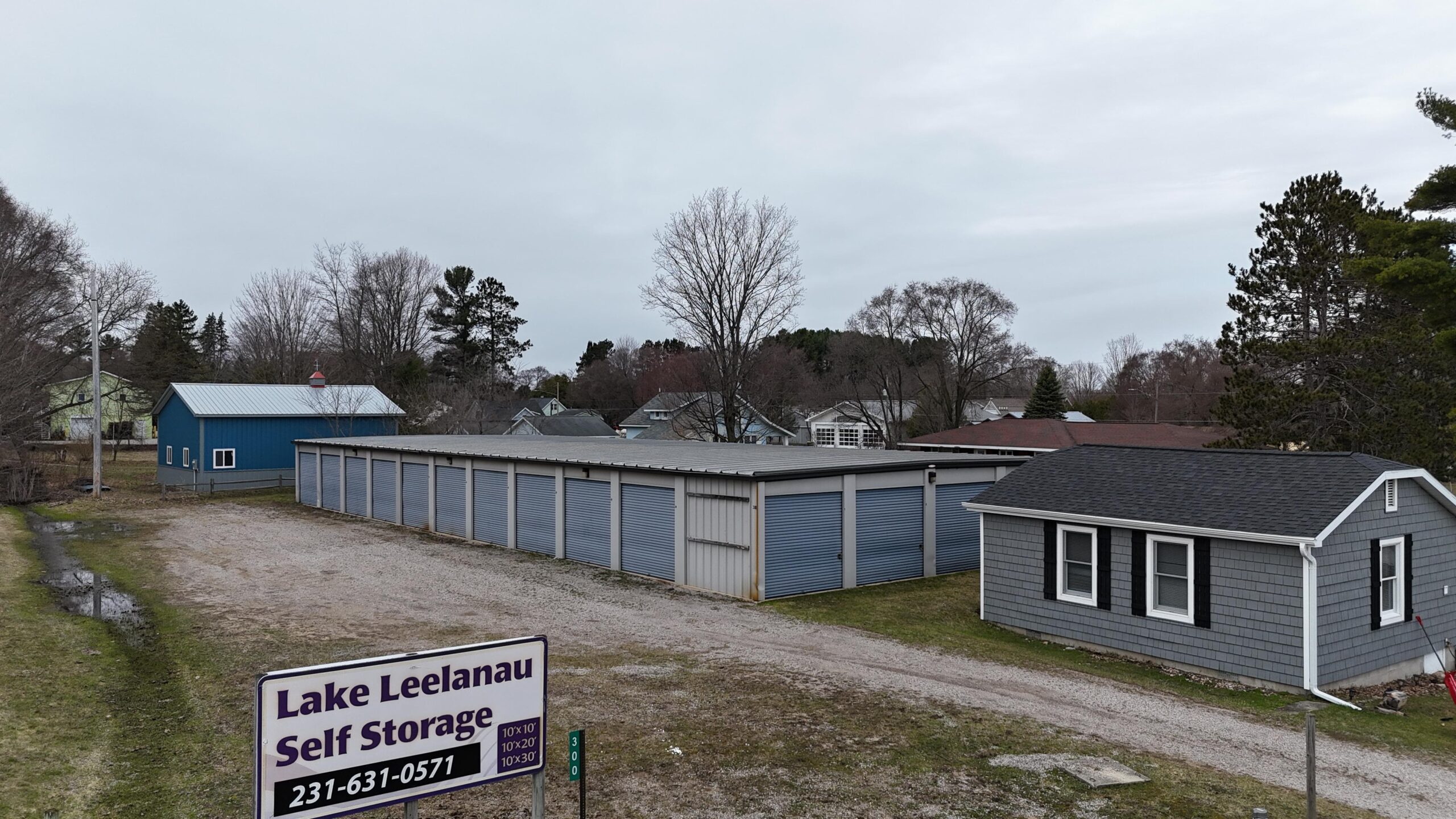
The property at 300 W Philip St didn’t get seven offers because of the house.
It got seven offers because of the storage.
That’s the part most people miss.
What Actually Drove Demand
On paper, the property includes:
- 24 self-storage units
- A 2-bedroom cottage used as a short-term rental
- Commercial zoning
- Location near the Narrows corridor
But the residential piece wasn’t the driver.
The value was a fully occupied, income-producing storage asset in a market where those are hard to find.
- No vacancy.
- No lease-up risk.
- Proven demand at existing pricing.
That combination doesn’t show up often in Leelanau County.
When it does, buyers move quickly.
Why Storage Is Hard to Find Here
This isn’t about one property. It’s about how the region works.
Leelanau County isn’t set up for easy commercial expansion.
- Commercial zoning is limited.
- Most viable parcels are already in use.
- Approvals for new development take time, and often face resistance.
Storage facilities, in particular, tend to run into friction. They’re visible. They don’t always align with how communities want development to look.
So even when demand is obvious, supply doesn’t respond.
The Demand Is Already There
The demand for storage in this area isn’t speculative. It’s functional.
- Short-term rental owners need space for linens and equipment.
- Seasonal homeowners need somewhere to store boats, docks, and outdoor gear.
- Contractors operate in a market with limited commercial infrastructure.
- Year-round residents downsizing still need space for what they keep.
None of those groups are building storage facilities.
They’re competing for the ones that already exist.
Why This Sale Matters
Seven offers tells you something.
Not about pricing. About scarcity.
Buyers weren’t competing for upside. They were competing for certainty.
- A stabilized asset.
- Immediate income.
- Limited risk.
That’s what drew the attention.
And in this market, those opportunities don’t come up often.
What This Points To
This doesn’t mean new storage development is about to take off.
The constraints haven’t changed.
- Zoning is still limited.
- Community resistance is still there.
- Suitable parcels are still scarce.
What does change is how existing assets are valued.
When something is difficult to replicate and already performing, buyers pay attention.
And they compete.
The Broader Pattern
This fits into a larger pattern across Northern Michigan.
The most competitive assets aren’t always the most obvious ones.
They’re the ones that:
- Are difficult to recreate
- Solve a real, ongoing need
- Don’t depend on future development to justify their value
That includes:
- Dockable shoreline in protected water
- Buildable land with confirmed approvals
- And in this case, small-scale storage that’s already full
Final Take
This wasn’t just a competitive listing.
It was a signal.
In Leelanau County, storage is underbuilt relative to demand.
And when something meets that demand cleanly, the market responds fast.
This article is part of the Northern Michigan Market Signals series examining supply, scarcity, and pricing behavior across Northern Michigan.