
How conservation decisions shape land supply, development patterns, and real estate markets in Leelanau County
The former Sugar Loaf ski resort property in Leelanau County has been permanently preserved through a transfer to the Leelanau Conservancy.
The 280-plus-acre property has been transferred to the Leelanau Conservancy for permanent conservation and public use.
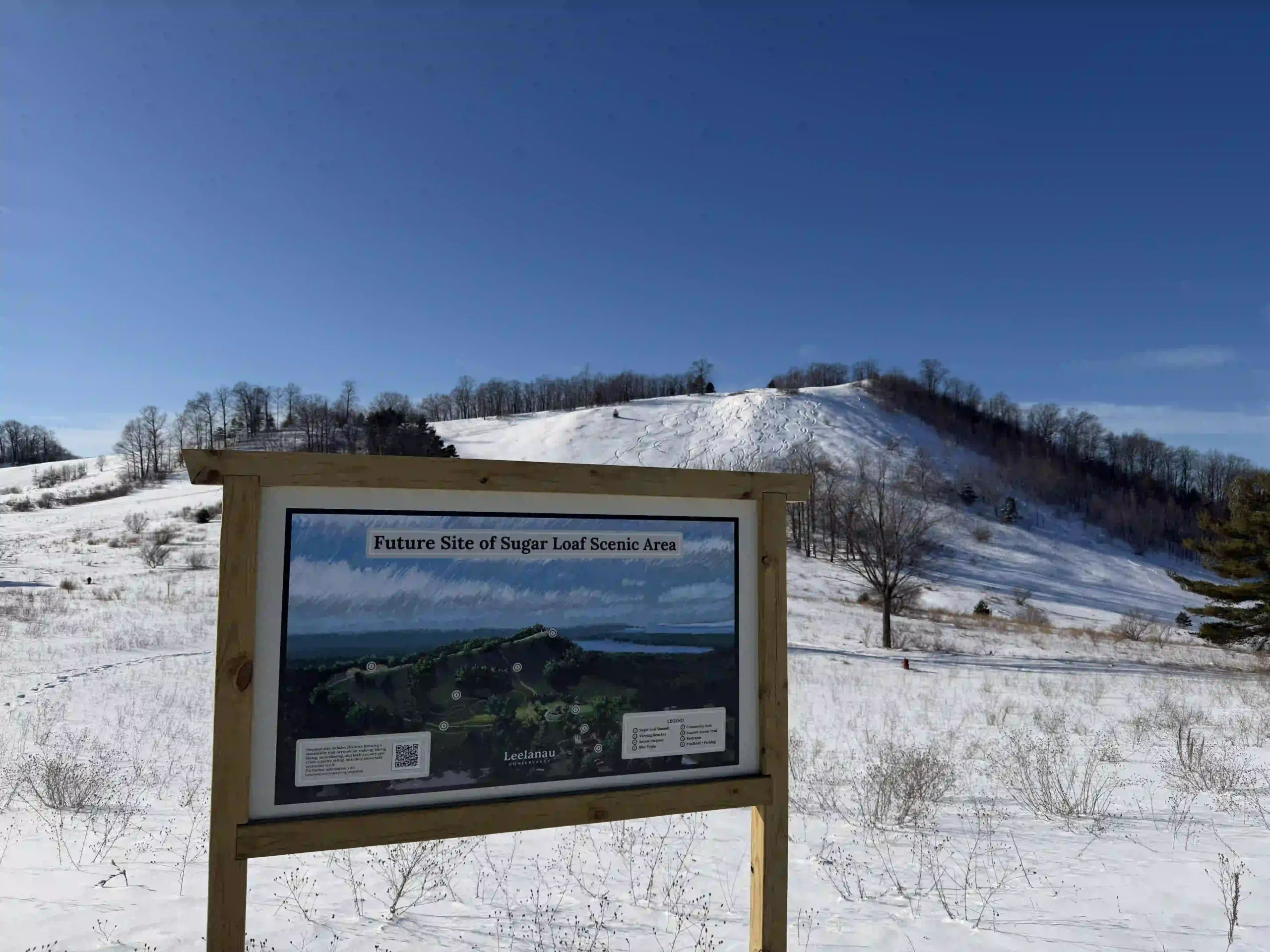
Sugar Loaf is one of the most prominent landscape features in central Leelanau County. Rising above the surrounding countryside near the Lake Michigan shoreline, the hill has long been visible across much of the region.
The preservation of the property also illustrates broader land-use patterns affecting northern Michigan.
Permanent conservation of large land tracts reduces the amount of property that can enter the future development pipeline. Over time, these decisions influence regional development patterns and the structural supply of developable land.
These dynamics are central to understanding land use and real estate markets across northern Michigan.
What the Sugar Loaf Preservation Case Illustrates
The preservation of the former Sugar Loaf resort highlights several broader land-use patterns that shape Northern Michigan.
- Large conservation projects permanently remove land from the pool of future development.
- Over time, protected land influences the structural supply of buildable property in a region.
- Northern Michigan’s landscape is shaped not only by geography but by decades of conservation decisions.
- The cumulative effect of protected land helps explain why development patterns on the Leelanau Peninsula differ from many resort regions.
The History of the Sugar Loaf Property
The Sugar Loaf property operated for decades as a regional ski resort and recreational destination.
Beginning in the 1960s, the hill developed into one of the best-known ski areas in northern Michigan. The elevation of the hill and its location near Lake Michigan created conditions suitable for winter recreation, and the resort became a well-known destination for both residents and visitors.
After the resort closed in the early 2000s, the property entered a prolonged period of uncertainty.
Ownership changed several times after closure, and the property remained largely inactive for many years.
In 2020, the property was quietly purchased by a subsidiary of the Edmund F. and Virginia B. Ball Foundation. At the time, the identity of the buyers was not publicly disclosed.
Cleanup efforts included the demolition of abandoned resort structures and remediation of deteriorating buildings.
These actions marked the beginning of a transition that ultimately led to the property’s transfer to the Leelanau Conservancy.
Future Use of the Property
With the transfer now complete, the Sugar Loaf property is expected to become a public natural area managed by the Leelanau Conservancy.
Planning concepts for the property include recreational and environmental features such as:
- hiking trails
- mountain biking routes
- snowshoeing and cross-country skiing trails
- accessible trails for visitors with mobility limitations
- a summit pavilion overlooking the surrounding landscape
- ecological restoration to support habitat and watershed protection
Because the property had been closed for many years and contained abandoned infrastructure, ongoing stewardship work is required before it can safely open to the public.
Future public access to the summit would restore recreational use of one of the region’s most recognizable landscape features.
Conservation and the Structural Supply of Land
Conservation decisions permanently remove land from the development supply.
In regions such as the Leelanau Peninsula, where large areas are already constrained by shoreline protection, wetlands, dunes, and local zoning policies, preserved land can reinforce structural limits on development.
These constraints influence long-term land supply more than short-term market cycles.
As a result, conservation patterns are one of the underlying factors shaping real estate markets across northern Michigan.
Expert Insight
“Conservation is often discussed as an environmental issue, but it also functions as a land-supply mechanism. Each preserved parcel permanently removes acreage from the development pipeline, which gradually shapes regional real estate markets.”
— Sander Scott
Land Preservation and the Supply of Developable Property
When large tracts of land are permanently protected through nonprofit ownership, conservation easements, or public acquisition, those acres are permanently removed from the pool of land available for subdivision or development.
This has several long-term land-use effects.
First, conservation protects natural resources and scenic landscapes. Organizations such as the Leelanau Conservancy have protected thousands of acres across the peninsula, including forests, shoreline, wetlands, and farmland.
Second, it stabilizes long-term land-use patterns by preventing future subdivision or development.
Third, conservation can influence surrounding real estate markets by limiting the amount of land that can ever enter the development pipeline.
Real estate markets are influenced by many factors including zoning, infrastructure, economic conditions, and buyer demand. Over long periods of time, however, the cumulative effect of conservation decisions can influence how much land remains available for development.
Conservation Patterns Across the Leelanau Peninsula
Sugar Loaf reflects a broader land-conservation pattern across the Leelanau Peninsula.
Over the past several decades, conservation organizations, public agencies, and private landowners have worked to permanently protect thousands of acres across the county.
- forestland and wildlife habitat
- farmland preserved through conservation easements
- shoreline parcels along Lake Michigan
- wetlands and watershed protection areas
- scenic overlooks and natural areas
Together, these protected lands form a network of conservation areas that shape the landscape and development patterns of the peninsula.
Why the Preservation of Sugar Loaf Matters
The preservation also illustrates broader structural forces shaping land use in northern Michigan.
The landscape visible today reflects both natural geography and decades of land-use decisions.
Each conservation project contributes to a pattern that determines which areas remain undeveloped and which areas may eventually support homes, farms, or businesses.
The preservation of Sugar Loaf ensures that the hill will remain a protected landscape feature while contributing to the broader conservation network across the Leelanau Peninsula.
Long-Term Forces Shaping Land Supply
Real estate market commentary often focuses on short-term factors such as interest rates, inventory levels, or seasonal demand.
However, long-term land supply is shaped by structural forces.
Geography determines where development is physically possible.
Regulation determines where development is legally permitted.
Conservation determines which properties will remain permanently undeveloped.
Together, these forces determine the long-term supply of land available for residential or commercial development.
The preservation of Sugar Loaf represents another long-term decision shaping the future land-use pattern of the region.
Frequently Asked Questions About Sugar Loaf and Land Conservation in Leelanau County
Why was the Sugar Loaf property preserved?
The former Sugar Loaf resort property was transferred to the Leelanau Conservancy to ensure permanent conservation of the land and eventual public recreational access. The preservation protects the landscape while allowing the property to be restored for outdoor recreation and environmental stewardship.
How large is the Sugar Loaf property?
The property contains more than 280 acres of land in central Leelanau County. The site includes the prominent Sugar Loaf hill, which is visible from many parts of the surrounding region.
Who owned the property before it was transferred to the Conservancy?
In 2020 the property was purchased by a subsidiary of the Edmund F. and Virginia B. Ball Foundation. The foundation funded cleanup work and demolition of abandoned structures before transferring the property for permanent conservation.
When will the Sugar Loaf property open to the public?
The property remains closed while stewardship and restoration work is completed. Public access will likely occur in phases as trails and safety improvements are developed.
How does land conservation affect real estate markets?
Conservation permanently removes land from the pool of property that could otherwise be subdivided or developed. Over long periods of time, the cumulative effect of conservation projects can influence the structural supply of developable land within a region.
Why is development limited in parts of the Leelanau Peninsula?
Development patterns in Leelanau County are influenced by several structural factors, including shoreline protection, wetlands, dunes, agricultural preservation, local zoning policies, and conservation land ownership. Together these constraints shape the long-term supply of land available for development.
Related Reading
- Northern Michigan Land Ownership Guide
- Michigan Land Division Act Explained
- Evaluating Buildable Vacant Land in Michigan
- Structural Limits on Lake Michigan Waterfront Housing Supply
Primary Sources and References
- Leelanau Conservancy
https://www.leelanauconservancy.org - Leelanau Ticker
https://www.leelanauticker.com - Edmund F. and Virginia B. Ball Foundation
https://www.ballfdn.org - Michigan Legislature
https://www.legislature.mi.gov
Author
Sander Scott is a real estate broker and Northern Michigan land market observer based in Leelanau County. His writing focuses on land ownership structures, conservation patterns, and development constraints affecting waterfront and rural property across northern Michigan.
Media inquiries:
Research Notes
This article examines the preservation of the Sugar Loaf property as a case study in regional land-use patterns on the Leelanau Peninsula.
Observations in this article are based on publicly available information regarding the property transfer, regional conservation activity, and land-use conditions affecting development in northern Michigan.
Land supply in the region is influenced by several structural factors, including:
- shoreline protection along Lake Michigan
- wetlands and environmental protections
- agricultural preservation and conservation easements
- local zoning policies governing parcel division and development
- nonprofit conservation land ownership
These factors collectively shape the long-term supply of land available for residential and commercial development across northern Michigan.
About the Sugar Loaf Property
Sugar Loaf is a prominent hill and former ski resort located in central Leelanau County, Michigan, near the Lake Michigan shoreline.
The site operated for decades as a regional ski destination beginning in the 1960s. After the resort closed in the early 2000s, the property remained inactive for many years while ownership changed several times.
The property contains more than 280 acres of land and includes the distinctive hill known locally as Sugar Loaf, which rises above the surrounding countryside and is visible from many parts of the region.
The property is now permanently preserved through ownership by the Leelanau Conservancy.