
A Small Leelanau Shoreline Community on Omena Bay
Omena is not a large town, and it does not function like a full-service village.
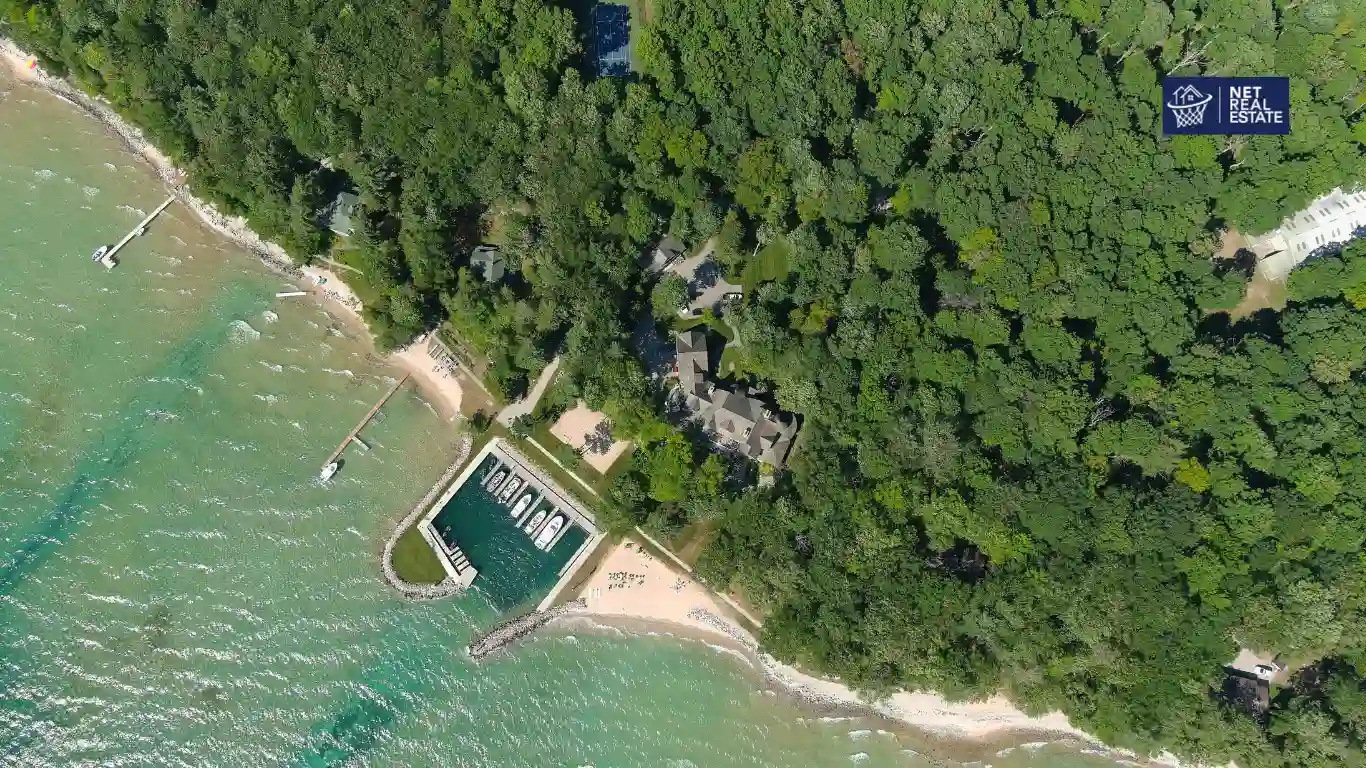
That is part of what makes it different.
Omena is a small shoreline community on Omena Bay, positioned along M-22 between Suttons Bay and Northport.
For real estate purposes, Omena should be understood as a place shaped by water, road access, historic buildings, agricultural land, seasonal use, and Leelanau Township governance.
It is not only a scenic place on the map.
It is a specific ownership environment.
If you are evaluating a home, cottage, vacant parcel, waterfront property, or short-term rental possibility near Omena, the most important question is not simply whether you like the setting.
The better question is:
Does the property actually work for the way you plan to use it?
That is where Property Usability becomes important.
Where Omena Is
Omena sits on the eastern side of the Leelanau Peninsula along Omena Bay, a protected indentation connected to Grand Traverse Bay.
The community is located along M-22, roughly between Suttons Bay to the south and Northport to the north.
That location gives Omena a particular kind of appeal.
It has water, a small village center, historic structures, nearby agricultural land, and access to both the Northport and Suttons Bay sides of northern Leelanau County.
But it also means buyers should understand that Omena is not organized like a larger city or a conventional subdivision.
There is no broad grid of streets.
There is no dense commercial district.
There are limited services directly in the village center.
Most ownership decisions here depend on the specific property, the road, the shoreline, the septic system, the access, and the intended use.
For broader community context, see the Northern Michigan Communities page.
How Omena Feels Different From Nearby Communities
Omena sits between more recognizable buyer search areas.
Northport has a stronger village identity, a marina, walkable businesses, and a larger year-round community pattern.
Suttons Bay has more commercial activity, village infrastructure, restaurants, schools, marina access, and a more active corridor feel.
Omena is quieter and smaller.
That does not make it less valuable.
It means the value is different.
Omena tends to appeal to buyers who want one or more of the following:
- a smaller shoreline setting
- proximity to Omena Bay
- access to M-22 without being in a busier village
- historic Leelanau character
- nearby orchards, vineyards, farms, and wooded land
- a location between Northport and Suttons Bay
- a quieter second-home or seasonal ownership pattern
That makes Omena an important part of the Leelanau County real estate map, especially for buyers who are comparing Northport, Suttons Bay, Leland, and Lake Leelanau.
Omena Bay and the Waterfront Question
The waterfront is one of the main reasons buyers pay attention to Omena.
Omena Bay is not the same as exposed Lake Michigan shoreline.
It is also not the same as a small inland lake.
It sits in the middle of the Northern Michigan waterfront conversation.
Omena Bay is part of the larger Great Lakes system, but its landform gives it a more protected character than many open-water shorelines.
That distinction matters.
For buyers, Omena Bay often raises questions about:
- Protected Water
- Big Water
- Big Water vs. Protected Water
- Great Lakes Waterfront
- Waterfront Usability
- Dockable Shoreline
- Direct Private Frontage
- Public Access
A property on or near Omena Bay should not be evaluated only by the view.
Buyers should ask how the shoreline functions.
Is the water practical for swimming?
Is the access easy?
Is there a bluff, slope, stairway, or road crossing involved?
Is a dock realistic?
Is the frontage direct private frontage, shared access, public access nearby, or simply proximity to the water?
Those differences can change the ownership experience.
For a broader waterfront framework, start with the Northern Michigan Waterfront Property Guide.
Public Access at Omena Beach
Omena Beach is one of the most important public-access features in the area.
It gives residents, visitors, and nearby property owners a way to reach Omena Bay without owning direct frontage.
That can be a major benefit for non-waterfront properties near the village.
But public access should not be confused with private waterfront ownership.
A property near Omena Beach may have strong practical access to the water, but that is different from owning shoreline, controlling frontage, installing a private dock, or having private littoral rights.
This distinction is important for pricing, buyer expectations, and long-term satisfaction.
Buyers should be clear about the difference between:
- being near the water
- having public access nearby
- having deeded or shared access
- owning direct private frontage
- having dockable shoreline
Those are not the same ownership condition.
For related concepts, see Public Access, Public Road End, Shared Waterfront Access, and Direct Private Frontage.
Waterfront Rights and Shoreline Limits
Because Omena Bay connects to the Great Lakes system, buyers should be careful with shoreline assumptions.
Waterfront property here can involve questions about Littoral Rights, Public Trust Doctrine, the Ordinary High Water Mark, and Bottomlands.
Those concepts are not abstract legal trivia.
They can affect how a buyer understands beach use, dock placement, shoreline improvements, public walking rights, private control, and state permitting.
A buyer should not assume that waterfront ownership means unlimited control over everything near or below the water’s edge.
A seller should not overstate what a property allows unless the rights are documented.
This is where waterfront property in Omena needs careful explanation.
The Built Environment in Omena
Omena’s built environment is small, mixed, and historically layered.
You will see a combination of:
- historic shoreline cottages
- older homes near M-22
- small commercial and hospitality buildings
- waterfront and water-view properties
- inland homes on wooded or agricultural parcels
- orchards, vineyards, and open land nearby
- larger residential parcels outside the village center
That mix is part of Omena’s character.
It also means properties should not be evaluated with one simple standard.
A small historic cottage near the bay raises different questions than a larger inland parcel.
A waterfront property raises different questions than a home near public access.
A rural property outside the village center raises different questions than a property directly on M-22.
This is why Omena real estate should be evaluated through property fit, not just location appeal.
Historic Character and Preservation
Omena has a historic identity that is stronger than many small shoreline communities of its size.
The Omena Historic District and the preservation work around the village help explain why the built environment feels distinct.
Historic character can add value, identity, and appeal.
But it can also create questions.
Buyers should ask whether a property is affected by historic-district considerations, local expectations, building condition, renovation limits, or preservation-sensitive improvements.
That does not mean historic property is a problem.
It means older properties should be evaluated honestly.
Condition, maintenance, heating, septic, insulation, roof age, drainage, crawl spaces, and seasonal use all matter.
A historic cottage can be a wonderful ownership experience, but only if the buyer understands the property’s real requirements.
Omena and Property Usability
Omena is a good example of why Property Usability matters.
A property can look simple and beautiful in Omena but still raise practical questions:
- Is the property usable year-round?
- Is the road access easy in winter?
- Is the septic system appropriate for the intended use?
- Is the property walkable to the beach or only visually close to the water?
- Does the shoreline support the way the buyer wants to use it?
- Is the setting private in real life or just in photos?
- Does M-22 create convenience, exposure, traffic, or noise?
- Does the property work for guests, family, aging owners, or seasonal visitors?
Those questions are more useful than simply asking whether Omena is a “good place to live.”
The better question is whether a specific Omena property matches the buyer’s intended ownership pattern.
For related concepts, see Access Friction, Seasonal Honesty, Use Decay, and Practical Privacy.
Seasonal Ownership Patterns
Omena changes by season.
Summer brings more shoreline use, visitors, boating, beach activity, events, restaurants, and movement along M-22.
Fall is quieter but still active because of color season, wineries, farm stands, and Leelanau travel.
Winter is different.
The community becomes quieter, services are more limited, weather matters more, and access, snow removal, heating, and maintenance become more important.
This matters for buyers.
A property that feels perfect on a July afternoon may feel very different in February.
That does not make it a bad property.
It means the buyer needs Seasonal Honesty.
Omena should be evaluated as a real ownership setting across the whole year, not just as a summer scene.
Short-Term Rental Considerations in Omena
Omena properties are within Leelanau Township, so short-term rental questions should start with Leelanau Township rules.
But the township rule is only one layer.
Buyers should also review:
- current township STR permit requirements
- approved bedroom count
- Septic Suitability
- parking
- neighbor proximity
- private restrictions
- historic-district considerations
- waterfront access claims
- cleaning and management logistics
- seasonality
Omena may look attractive for vacation-rental use because of its bay, M-22 location, wineries, restaurants, and proximity to Northport and Suttons Bay.
But STR appeal is not the same as STR Viability.
A property has to work legally, physically, operationally, and seasonally.
For broader STR analysis, see Regulatory Friction, Septic Suitability, and Interpretation Gap Risk.
Vacant Land and Buildability Near Omena
Not every Omena-area property is waterfront or improved residential property.
Some buyers look at vacant land, wooded parcels, agricultural settings, or larger acreage near Omena.
Those properties need a different evaluation.
Vacant land near Omena should be reviewed for:
- legal access
- driveway feasibility
- soil conditions
- well and septic feasibility
- wetlands
- slope
- zoning
- private road obligations
- buildable area
- distance from utilities and services
For land-specific guidance, start with the Northern Michigan Land Ownership Guide, Buildability Gap, Legal Access, and Infrastructure Gap.
What Buyers Should Pay Attention To
If you are considering property in Omena, pay attention to the specific ownership condition, not just the place name.
Key questions include:
- Is the property directly on Omena Bay, near the bay, or simply in the Omena area?
- Does the property have direct private frontage, shared access, public access nearby, or no legal water access?
- Is the shoreline protected, exposed, dockable, swimmable, or difficult to use?
- Is the property inside or near the historic district?
- What zoning and land-use rules apply?
- What does the septic system support?
- Does the home work year-round or mainly seasonally?
- Is the property affected by M-22 traffic, road exposure, or limited parking?
- Does the property support the buyer’s intended use?
- What assumptions need to be verified before closing?
These questions reduce Transaction Friction.
They also help prevent buyer disappointment after closing.
What Sellers Should Understand
Omena sellers should not rely only on broad location appeal.
The strongest seller position is clear explanation.
A good Omena listing should help buyers understand:
- the property’s actual relationship to Omena Bay
- whether water access is private, shared, public, or nearby only
- how the property functions seasonally
- what the septic system supports
- what zoning or private restrictions may apply
- how the property fits into Omena’s historic, waterfront, or agricultural setting
- what buyer assumptions should be verified early
This is especially important for waterfront, STR, vacant land, and older cottage properties.
When property-use questions are left vague, buyers may hesitate, ask for more documentation, renegotiate, or lose confidence.
That is often a sign of Buyer Friction Signal.
Who Omena May Fit Best
Omena may be a good fit for buyers who want a quieter Leelanau setting with access to water, village character, farms, wineries, and M-22 movement without being in the middle of a larger commercial center.
It may be less ideal for buyers who want:
- a large walkable downtown
- municipal-style services
- a broad year-round retail base
- dense neighborhood infrastructure
- simple assumptions about rental use
- automatic private waterfront rights
That does not make Omena better or worse than Northport, Suttons Bay, Leland, or Lake Leelanau.
It makes it different.
The right decision depends on ownership fit.
Watch: Omena, Omena Bay, and Leelanau Property Fit
Omena would benefit from a short area video because the place is easier to understand visually.
Related Omena and Leelanau Resources
- Northern Michigan Communities
- Living in Northport, Michigan
- Living in Suttons Bay, Michigan
- Living in Leland, Michigan
- Living in Lake Leelanau, Michigan
- Northern Michigan Waterfront Property Guide
- Waterfront Ownership
- Waterfront Usability
- Protected Water
- Big Water vs. Protected Water
- Public Access
- Dockable Shoreline
- Property Usability
- STR Viability
- Northern Michigan Transaction Friction
Frequently Asked Questions About Living in Omena
Is Omena a city or village?
Omena is best understood as a small unincorporated shoreline community in Leelanau County. For property evaluation, buyers should pay close attention to Leelanau Township governance, zoning, septic, land-use rules, and any property-specific restrictions.
Is Omena waterfront protected water?
Omena Bay generally has a more protected character than fully exposed Lake Michigan shoreline, but buyers should still evaluate the specific shoreline, wind exposure, dockability, depth, access, and seasonal behavior of the property.
Does being near Omena Beach mean a property has private waterfront?
No. Public access nearby is not the same as direct private frontage, deeded access, shared waterfront access, or dockable shoreline. Buyers should verify exactly what water rights, if any, are tied to the property.
Can Omena properties be used as short-term rentals?
Short-term rental questions in Omena should start with current Leelanau Township rules, but that is only the first layer. Buyers should also verify septic capacity, approved bedroom count, parking, private restrictions, management logistics, and whether the property is actually STR-viable.
What is the biggest real estate mistake buyers make in Omena?
The biggest mistake is assuming that the setting answers the use question. Omena is attractive, but every property still needs to be evaluated for access, water rights, septic, zoning, seasonality, maintenance, and long-term ownership fit.
Final Take
Omena is one of the more distinctive small shoreline communities in Leelanau County.
Its value comes from the way Omena Bay, M-22, historic structures, public access, farmland, wooded land, and seasonal patterns fit together.
But Omena should not be evaluated with generic relocation language.
It should be evaluated by structure.
What is the property’s relationship to the water?
What rules govern it?
How does access work?
What does the septic system support?
Does the property function year-round or seasonally?
Does it match the buyer’s intended ownership pattern?
The best Omena property is not simply the one with the prettiest setting.
It is the one that works for the way the owner actually plans to use it.